Better glute strength comes from training hip extension, abduction, and single-leg control with progressive resistance, not from chasing a burning sensation or using a women-only exercise list. The same training principles apply broadly, while exercise choice should reflect individual anatomy, goals, experience, and health.
TL;DR: Train the glutes two or three times weekly with a mix of squat or lunge patterns, hinges, bridges or hip thrusts, and lateral or single-leg work. Use controlled range, stable technique, and progressive load or repetitions. Allow recovery and judge progress by strength and function, not soreness alone.
What the glutes actually do
The gluteus maximus contributes strongly to hip extension, such as rising from a squat or driving the hip forward from a hinge. The gluteus medius and minimus contribute to hip abduction and pelvic control, especially during single-leg tasks. These muscles work with the trunk, adductors, hamstrings, quadriceps, and lower leg rather than in isolation.
That is why an effective plan uses several movement patterns. One exercise may challenge the glutes most in a lengthened position, another near full hip extension, and another during side-to-side stability. No single movement is mandatory.
Build the program around four categories
- Squat or lunge: Goblet squat, split squat, reverse lunge, or step-up.
- Hinge: Romanian deadlift, cable pull-through, or a suitable hip-hinge variation.
- Bridge or thrust: Floor bridge or hip thrust with body weight or resistance.
- Lateral and single-leg control: Side steps, hip abduction, supported single-leg squat, or single-leg balance variations.
A beginner can start with the movement skills in the total-body dumbbell workout before adding more glute-specific volume. A stable base makes additional sets more useful and easier to recover from.
Select exercises by stimulus and comfort
An exercise is useful when it trains the intended pattern, can be performed through a controlled comfortable range, and can be progressed. Feeling a muscle work is helpful feedback, but the absence of a dramatic burn does not prove the muscle is inactive.
Research comparing exercise muscle activity can inform selection, but electromyography is not a direct ranking of long-term growth. A systematic review of gluteus maximus activity in common exercises identified several movements with high activation, yet real programming still depends on load, range, volume, technique, and progression.
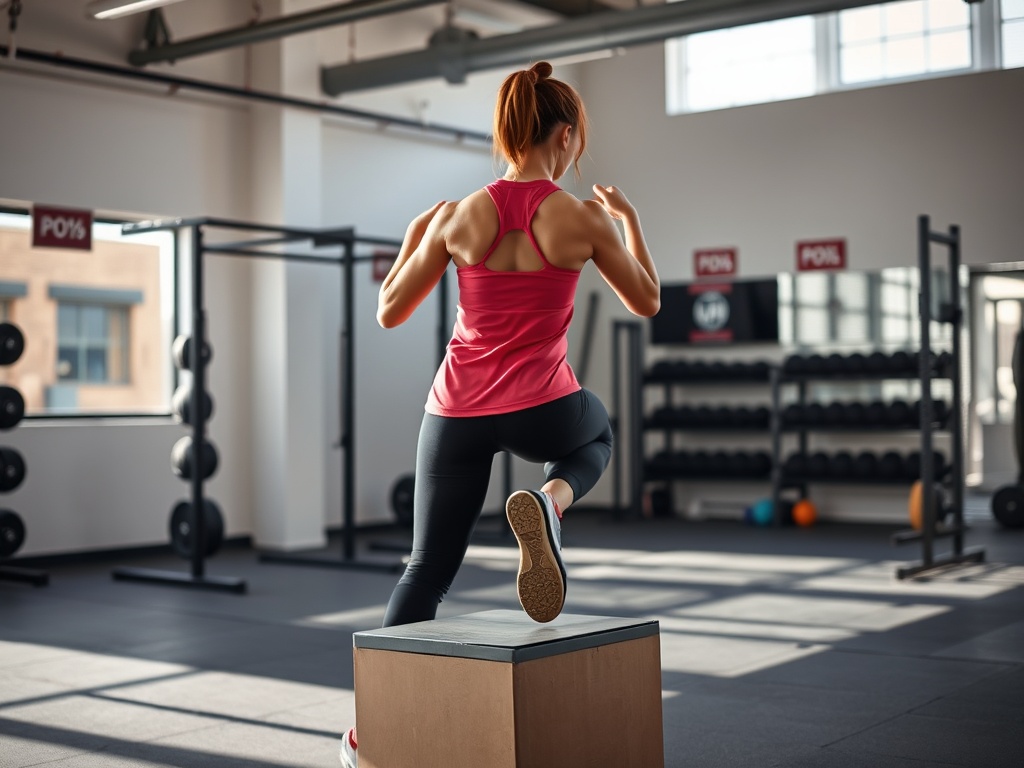
A two-day lower-body framework
| Day A | Day B |
|---|---|
| Goblet squat: 2–4 controlled sets | Romanian deadlift: 2–4 controlled sets |
| Hip thrust or bridge: 2–4 sets | Split squat or step-up: 2–4 sets |
| Side step or abduction: 2–3 sets | Single-leg control exercise: 2–3 sets |
| Calf or trunk exercise as needed | Carry or trunk exercise as needed |
The ranges are broad because training status and total program volume differ. Start near the lower end. Add repetitions within a planned range, then increase resistance when all sets remain controlled. The 2026 ACSM resistance-training guidance supports training major muscle groups regularly and individualizing variables to the goal.
Technique cues that preserve the goal
During squats and lunges, keep the whole foot supported and allow the knee and hip to move in a comfortable path. A slightly longer stride may shift emphasis in a lunge, but forcing an extreme stride can reduce stability. During hinges, move the hips backward and keep the load close enough to control.
In bridges and hip thrusts, finish with hip extension rather than excessive lower-back arching. The ribs and pelvis should remain organized, and the range should stop where the hip completes the task. In lateral work, avoid turning the toes or torso solely to create a larger apparent range.
Progress without adding everything
Progress can come from more load, more repetitions, another set, better range, improved control, or a harder variation. Choose one. A person who adds bands, ankle weights, sets, and extra training days together cannot easily tell which change caused excessive soreness or pain.
The article on avoiding overuse injuries during volume increases provides a traffic-light approach for deciding when to continue, hold, or seek assessment. Glute training should challenge muscle without creating persistent hip, back, or knee symptoms.
Do women need a different glute method?
There is no universal women-only formula. Menstrual-cycle experiences, pregnancy and postpartum status, pelvic-floor symptoms, menopause, contraception, iron status, and individual preferences can affect training for some women, but responses vary. These factors justify individualization, not stereotypes.
Pregnant or postpartum participants, people with pelvic pain, and those with prolapse symptoms or significant leakage should seek advice from an appropriately qualified clinician. Heavy training is not automatically unsuitable, but the right progression depends on medical and training context.
Nutrition and recovery still set limits
Muscle growth requires repeated resistance training and adequate recovery. Total energy and protein intake matter, but there is no need to turn food into a purity contest. The guide to whole foods versus processed foods shows how convenient foods can fit a supportive pattern.
If the primary goal is strength rather than muscle size, judge the plan by improved load, repetitions, control, and function. Visible change is affected by body-fat distribution, training history, and genetics. Promising one shape or timeline would turn a sound training process into an appearance guarantee it cannot make.
Sleep and session spacing matter too. Training the glutes hard every day may reduce quality rather than accelerate adaptation. If soreness changes your walking pattern or persists into the next planned session, reduce the recent stressor.
Myths that waste effort
“You must feel sore to grow.” Soreness can occur after unfamiliar work but is not a direct measure of an effective program.
“Activation drills must fatigue the muscle first.” A short warm-up can improve confidence or technique, but exhausting the target muscle may reduce performance in the main lifts.
“A band above the knees automatically makes every squat better.” A band changes the task. Use it only if it serves a clear purpose and does not distort technique.
“One hip shape is the correct result.” Bone structure, fat distribution, and muscle architecture vary. Training can improve strength and may change muscle size, but it does not create one standardized body shape.
Measure lower-body strength in useful ways
Track the load and repetitions of two main movements, the control of one single-leg task, and one functional marker such as comfortable stair climbing. Use consistent technique so comparisons mean something. Photos can be optional, but they should not replace performance and health measures.
Exercise variety should serve coverage or comfort, not anxiety. Keep the main patterns stable for several weeks so skill and strength can develop, while using small substitutions when equipment or symptoms require them. Constantly replacing movements can create soreness without producing a clear progression signal.
Choose four movements from the categories above, complete two weekly sessions for a month, and progress only when technique and recovery support it. Stronger glutes are the result of patient training, not a secret exercise.