
An all-inclusive family resort can simplify parts of a trip, but the label does not guarantee that every meal, activity, childcare service, room arrangement, or safety feature will suit every family. The right choice comes from matching the property’s actual policies and facilities to your children’s ages, routines, and needs.
TL;DR: Verify what is included, who can use kids programs, room occupancy rules, pool and beach conditions, dining options, medical access, and transportation. “Family-friendly” is a broad description, not a standardized promise of childcare, convenience, or suitability for every age group.
Why Family-Friendly Labels Need a Closer Look
Parents and caregivers often choose all-inclusive resorts to reduce daily planning, control some trip costs, and keep activities close to the room. Those benefits can be real, but family travel adds practical requirements that differ sharply by age and household. A toddler’s needs are different from a teenager’s, and a resort that works well for one family may be frustrating for another. The most useful research focuses on policies, distances, supervision rules, food, sleep, safety, and the parts of the schedule your family cannot easily compromise on.
Myth 1: All-inclusive automatically means easier with children
Bundled meals and activities sound like they remove most planning from the trip. In practice, the resort can reduce some decisions while adding others, such as restaurant reservations, kids-club registration, shuttle timing, dress rules, stroller routes, and activity age limits. Large properties can also require more walking than families expect.
For a practical comparison, map a normal day before booking: room to breakfast, breakfast to pool, pool to lunch, quiet time, evening meal, and bedtime. If those transitions are difficult for your children, the package may not feel easy even when many services are included. If that detail could change the trip, verify it for the exact property, room, dates, or program before booking.
Myth 2: A kids club means drop-off care for every age and every hour
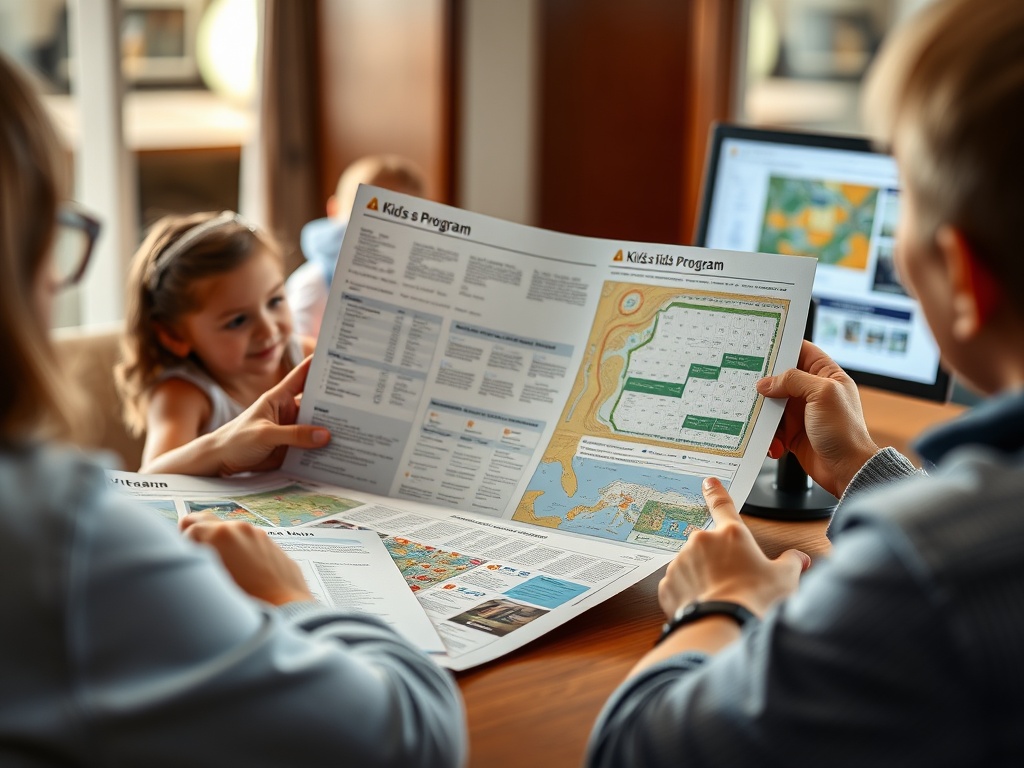
The phrase kids club is often displayed prominently in resort marketing, so families may assume broad access. In practice, programs can have minimum ages, toilet-training requirements, sign-in rules, capacity limits, limited evening hours, separate teen programs, or charges for babysitting outside scheduled activities. Policies may also change by season.
For a practical comparison, ask for the current written program rules for your travel dates. Confirm ages, hours, supervision model, reservations, capacity, late pickup rules, and what happens if a child does not want to participate. If that detail could change the trip, verify it for the exact property, room, dates, or program before booking. For a related comparison on this site, see All-Inclusive Food Quality.
Myth 3: All meals, snacks, and drinks are included without exceptions
The package name suggests a simple one-price dining system. In practice, some resorts include core restaurants but charge for premium menus, specialty items, room service, imported beverages, certain cafés, or special events. Reservation limits and restaurant opening schedules can also shape what is practically available.
For a practical comparison, review the dining inclusions and hours against your children’s meal times. Families who want a deeper look at dining assumptions can read the all-inclusive food-quality myths before treating a long restaurant list as a guarantee of variety. If that detail could change the trip, verify it for the exact property, room, dates, or program before booking.
Myth 4: Family room occupancy rules are flexible because children are small
Parents may assume a room with enough physical beds can legally and operationally hold the whole family. In practice, occupancy limits are set by property rules, room configuration, local requirements, and fire or safety considerations. A rollaway or crib may not increase the permitted occupancy, and connecting rooms may not be guaranteed unless specifically confirmed.
For a practical comparison, enter the exact ages and number of guests during booking and verify bedding. If connecting rooms are essential, get the policy in writing and understand whether the connection is guaranteed or only requested. If that detail could change the trip, verify it for the exact property, room, dates, or program before booking. For a related comparison on this site, see Shoulder Season in Beach Destinations.
Myth 5: A resort beach or pool means child safety is handled for you
Lifeguards, controlled grounds, and family amenities can create a strong sense of security. In practice, supervision expectations still matter, and water conditions, pool design, lifeguard coverage, and local hazards vary. The CDC guidance for traveling with children advises close supervision during water activities and appropriate life-jacket use, which is relevant even at well-run resorts.
For a practical comparison, check where lifeguards are present, what flotation devices are allowed, and how beach flags or water closures are communicated. Do not assume every pool, beach section, or water activity has the same supervision. If that detail could change the trip, verify it for the exact property, room, dates, or program before booking.
Myth 6: “Family-friendly” means the same thing at every resort
The label is broad enough to appear on properties with very different layouts and service models. In practice, one resort may focus on toddlers and splash areas, another on multigenerational villas, and another on active programs for school-age children and teens. Quiet hours, nightlife, pool atmosphere, stroller access, and dining flexibility can differ substantially.
For a practical comparison, define your family-friendly requirements in concrete terms. Instead of asking whether a resort welcomes families, ask whether it has the room layout, food schedule, activity age range, accessibility, and sleep environment your family needs. If that detail could change the trip, verify it for the exact property, room, dates, or program before booking. For a related comparison on this site, see Free Upgrades.
Match the Property to Your Family’s Daily Rhythm
Start with the non-negotiables: sleep, food, supervision, room layout, mobility, and downtime. The shoulder-season beach myths can help if travel dates are flexible, and the free-upgrade myths are useful when a family is tempted to book a smaller room and hope for something larger at check-in.
- Confirm exact room occupancy, bedding, crib, rollaway, and connecting-room policies.
- Request current kids-club age rules, schedules, reservations, and supervision details.
- Check restaurant opening hours and whether required reservations fit family meal times.
- Ask about stroller-friendly routes, elevators, accessible rooms, and distances across the property.
- Review beach, pool, transportation, and medical-access information for the ages traveling.
Food and water expectations also deserve practical research, especially for international trips. The CDC Yellow Book food and water guidance explains why food preparation, temperature control, and safe water practices matter to travelers. That information is about health risk, not a judgment of a resort’s cuisine, but it is a useful reminder that “all-inclusive” describes a package, not a universal food-safety standard.
The Family Test That Marketing Photos Cannot Answer
Imagine the hardest hour of a normal vacation day: a tired child, wet swimwear, a missed snack, and a long walk back to the room. Then ask how the resort would handle that moment. Is food available at the right time? Is the room close enough? Can a stroller use the shortest route? Is there shade near the pool? This is not a prediction that problems will happen. It is a practical way to see whether the property’s design supports your family when everyone is not at their best.
Match the Resort to Your Family Rhythm
The best all-inclusive family resort is the one whose actual rules and layout reduce friction for your household. Verify childcare, dining, room setup, water safety, and daily travel distances before paying. A short list of specific questions usually reveals more than a long amenity page, and it helps you choose a property because it fits your family rather than because it carries a broad family-friendly label.