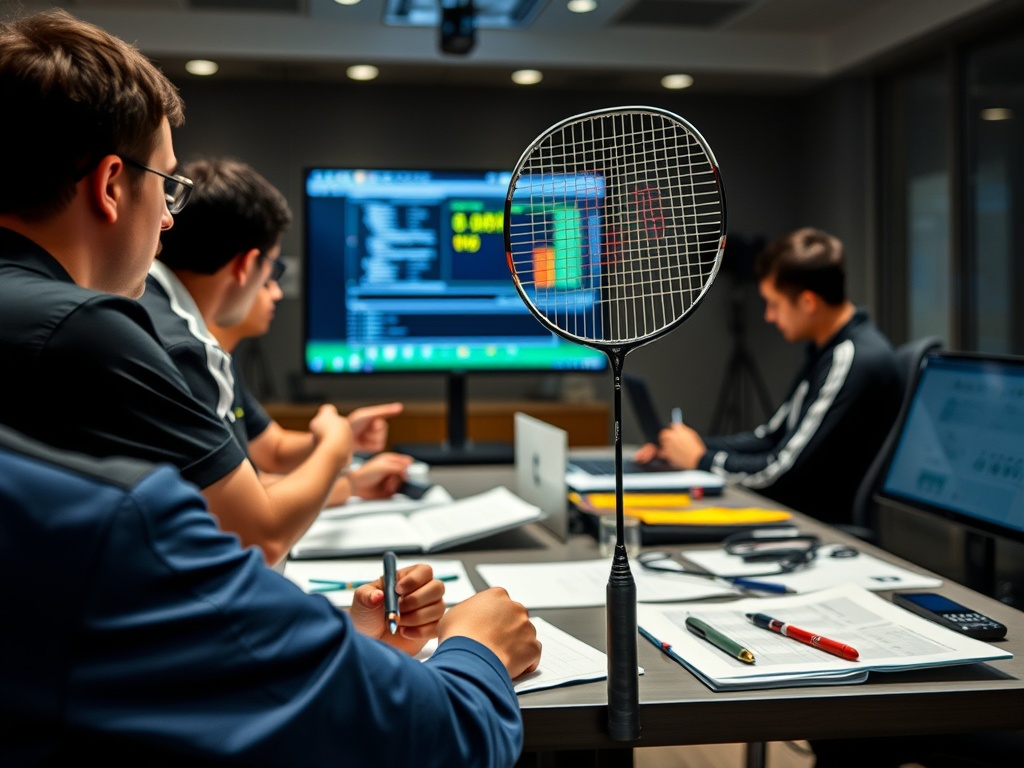
Badminton racket tension and weight change how the racket feels, how quickly it moves, and how forgiving it is on off-center contact. Beginners should prioritize comfort, control, and consistency before chasing advanced tension numbers.
TL;DR: Focus on the decision the article helps you make. Use official rules or medical guidance for facts, then treat tactics, value, and projections as analysis. A simple checklist usually beats a complicated system that people will not use.
Why Tension and Weight Change the Feel of Every Shot
String tension affects how the shuttle leaves the strings. Lower tension usually feels more forgiving and can help newer players generate easier length. Higher tension can feel more precise for players who already hit the sweet spot consistently, but it may reduce forgiveness and increase stress on the frame and strings. Racket weight affects swing speed, stability, fatigue, and how quickly a player can react in defense.
Beginners who are also learning broader sport systems may find it useful to compare gear decisions with the player-movement explainer in How Drafts, Transfers, Trades, and Free Agency Work in Pro Sports, because both topics reward understanding the rules before reacting to headlines or marketing claims.
| Factor | Beginner-friendly tendency | Trade-off |
|---|---|---|
| Lower string tension | More forgiving contact and easier depth. | Less crisp feedback for precise hitters. |
| Higher string tension | Sharper feel and control for consistent players. | Less forgiving and may break strings sooner. |
| Lighter racket | Quicker handling and easier defense. | Can feel less stable on powerful shots. |
| Heavier racket | More stability and potential momentum. | Can tire the arm and slow reactions. |
Do Not Copy a Pro Setup Too Early
Professional players often use equipment tuned to elite timing, strength, technique, and frequent restringing. A beginner copying that setup may lose power, comfort, and consistency. The better starting point is a racket that allows relaxed swings, clean contact, and steady practice volume. A setup that keeps you playing three times a week is usually more valuable than one that feels impressive for ten minutes.
The Badminton World Federation statutes and laws is the right place to check official laws and governance references, while racket tension itself should be treated as a fit and performance choice rather than a rule requirement.
How Beginners Should Choose Tension
There is no single perfect tension for every new player. Body size, swing speed, shuttle type, string type, climate, and coaching feedback all matter. A practical approach is to start in a forgiving range recommended by a qualified stringer or coach, then adjust slowly. If the shuttle consistently lands short despite good effort, the setup may be too demanding. If shots fly unpredictably after technique improves, a small tension increase may help.
Weight should be evaluated in actual movement, not just in the shop. Shadow swings can mislead because badminton is full of late reactions, quick changes, lunges, and defensive blocks. Test whether you can recover the racket after a smash defense, play repeated clears without shoulder tension, and control the racket head during net exchanges.
A Simple Court Test Before You Buy or Restring
- Hit ten relaxed clears and note whether length comes from timing or strain.
- Play fast defensive blocks and check whether the racket feels late.
- Try net shots and lifts to see whether the head feels stable.
- Ask whether mishits feel harsh, dead, or manageable.
- Change only one variable at a time: string, tension, grip, or racket weight.
Players who cross-train in other demanding sports may recognize the same balance of control and workload described in MMA Skill Development: How to Balance Striking, Grappling, and Conditioning, where adding difficulty too early can slow real development.
Budget, Upgrade Timing, and Maintenance
A beginner does not need the most expensive racket. Spend enough to get a safe, properly strung frame from a reputable source, then invest in coaching, court time, shoes, and shuttles. Upgrade when you can describe what your current racket does not do well. “I need faster defense,” “I want a more stable head,” or “my stringbed feels too soft after three weeks” are better reasons than “this model is popular.”
For players watching tournaments across countries, How to Follow International Sports Competitions Across Time Zones can help you follow events and notice how elite equipment preferences still vary by player style.
Choose Comfort First, Then Fine-Tune
The best beginner setup supports clean contact and repeatable practice. Start with comfort, ask for a stringer’s guidance, track how the racket feels after real sessions, and adjust gradually. A stable, forgiving setup will teach you more than a demanding one that makes every shot feel like a test.
Racket Fit Notes to Track After Practice
Keeping notes prevents random equipment changes. If you change strings, tension, grip thickness, and racket weight at once, you will not know what helped. A short practice log lets beginners improve feel gradually and avoid blaming the racket for problems that are actually timing, footwork, or contact-point issues.
Equipment decisions become easier when players separate comfort from performance preference. A beginner who can practice longer with less tension and a manageable racket weight is building the foundation needed for later precision. Once timing, footwork, and contact point become reliable, small changes in tension or balance can be tested with better feedback from the court.
A useful final filter is to ask what the reader can do in the next seven days. If the answer is unclear, the plan is still too abstract. Turn the idea into one practice adjustment, one family conversation, one checklist, one meal plan, one calendar setup, one safety policy, or one purchasing question. Small actions create feedback, and feedback is what turns general sports advice into a better decision.
- Write down how clears, net shots, and defensive blocks felt after a real session.
- Note any wrist, elbow, shoulder, or hand discomfort after changing tension or weight.
- Ask a coach or stringer about one adjustment at a time.