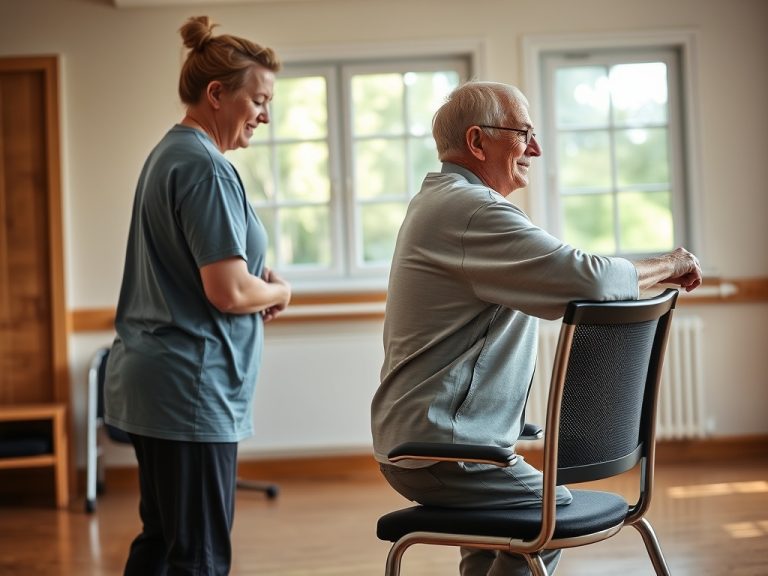
Fitness results rarely arrive on one universal schedule. Most people notice early changes in energy, coordination, or workout tolerance before large changes in strength, muscle size, endurance, or body composition become obvious.
TL;DR: Look for several kinds of progress, not one deadline. Session quality can improve within days, repeatable performance often changes over several weeks, and visible body-composition changes usually require a longer stretch of consistent training, nutrition, sleep, and recovery. A flat scale or unchanged mirror does not automatically mean the program is failing.
“Results” is not a single outcome
Before asking how long results take, define the result. A beginner who wants to feel less winded on stairs is measuring something different from a trained lifter trying to add muscle or a person trying to lower body weight. The answer also depends on the starting point, training history, program quality, age, health, food intake, sleep, stress, and how consistently the plan is followed.
Early improvements can be real even when they are not yet visible. Better exercise technique, improved confidence with weights, a lower perceived effort at the same walking pace, or the ability to complete one more repetition are useful adaptations. If your main goal is strength, a simple beginner dumbbell routine gives you repeatable exercises that make those changes easier to measure.
A practical timeline for common changes
| Approximate Phase | What You May Notice | What It Does Not Prove |
|---|---|---|
| First 1–2 weeks | Better familiarity, less uncertainty, improved coordination, a mood or energy lift after sessions | Major muscle gain or fat loss |
| Weeks 3–6 | More repetitions, steadier pacing, better tolerance, improved technique | That every week will improve at the same rate |
| Weeks 6–12 | Clearer strength or endurance trends; possible changes in measurements or clothing fit | A guaranteed visual transformation |
| Several months and beyond | More dependable body-composition, performance, and habit changes if the plan remains suitable | Permanent results without continued habits |
These ranges are orientation points, not promises. New trainees may improve quickly because they are learning movements and adapting to regular work. Experienced trainees often need more precise programming to create smaller gains. The CDC adult activity guidance recommends building toward regular aerobic activity plus muscle-strengthening work, but the health target is not a prediction of how fast one individual will look or perform differently.
Why strength can improve before muscles look bigger
In the early stage of resistance training, the nervous system becomes better at coordinating a movement. You may recruit the working muscles more effectively, stabilize the joints more confidently, and use a cleaner path through each repetition. Those skill-related changes can raise performance before meaningful hypertrophy is visible.
The 2026 ACSM resistance-training guidance emphasizes consistency, training all major muscle groups, gradual progression, and matching the prescription to the goal. It also makes an important point for impatient beginners: complex methods are optional for general results. A basic plan performed regularly can be more useful than an advanced plan followed sporadically.
Why visual change moves on a different clock
Appearance is affected by more than muscle and fat. Hydration, sodium, carbohydrate intake, digestion, menstrual-cycle changes, lighting, posture, and the time of day can all change what the scale or mirror shows. Short-term variation can easily mask a slow trend.
Nutrition quality also influences how manageable a plan feels. The goal is not to label every packaged item as harmful, but to create an eating pattern that supports training and energy control. Our guide to whole foods and processed foods explains how to judge foods by their overall role rather than by a simplistic label.
Use averages instead of isolated readings. If weight change is relevant, compare weekly average body weight under similar conditions. Take circumference measurements on the same schedule and use photos only when pose, lighting, distance, and clothing are consistent. One measurement can be noise; several weeks of comparable measurements can show a direction.
Four progress markers worth tracking
- Performance: Record load, repetitions, sets, distance, pace, or duration. Improvement at a similar effort is meaningful.
- Effort: Note a simple rating from 1 to 10. The same session feeling easier can indicate adaptation even if the numbers have not changed.
- Recovery: Watch sleep quality, soreness, motivation, and readiness for the next session. Progress that constantly damages recovery may not be sustainable.
- Body or health measures: Use only measures relevant to the goal, collected consistently. Clinical markers should be interpreted with a qualified health professional.
This broader dashboard reduces the chance that one stubborn metric controls your judgment. It also protects against changing a sound program every few days, which makes it difficult to learn what is working.
Common reasons progress looks slower than expected
The program may not provide progressive challenge, or the challenge may be rising too quickly to recover from. Exercise selection can also be hard to repeat, making comparison unreliable. In other cases, the plan is adequate but attendance is inconsistent, daily activity has fallen, food portions have drifted, or sleep has become shorter.
Expectation itself can be the problem. Social media often compresses a long process into a dramatic before-and-after frame. A rigid daily target can also turn one missed session into an abandonment trigger. Understanding when workout streaks help and when they backfire can make consistency more resilient.
When to adjust the plan
Avoid changing everything after one poor workout. First confirm that the plan has been followed with reasonable consistency and that measurements are comparable. If performance, recovery, and goal-specific outcomes show no useful trend across several weeks, make one controlled change. That might mean adding a small amount of load, one or two repetitions, a little aerobic time, or a modest nutrition adjustment.
Also separate a temporary stall from a mismatch between goal and method. A program can improve cardiovascular fitness without maximizing muscle growth, and a strength plan can work even when it produces little scale change. If the measured outcome does not match the program’s main stimulus, revise the measurement or choose a plan that better fits the stated goal.
Pain, dizziness, fainting, chest pressure, unusual breathlessness, or worsening symptoms are not ordinary progress problems. Stop and seek appropriate medical guidance. People returning after a long inactive period or managing chronic conditions should use individualized advice before increasing intensity.
Build a timeline you can actually evaluate
Choose two performance measures and one outcome measure, record a baseline, and review them on a fixed schedule. Give a sensible plan enough time to produce a trend while remaining willing to adapt when the evidence stays flat. The most useful question is not “Why do I look different yet?” but “Is my capacity, consistency, or recovery moving in the intended direction?”